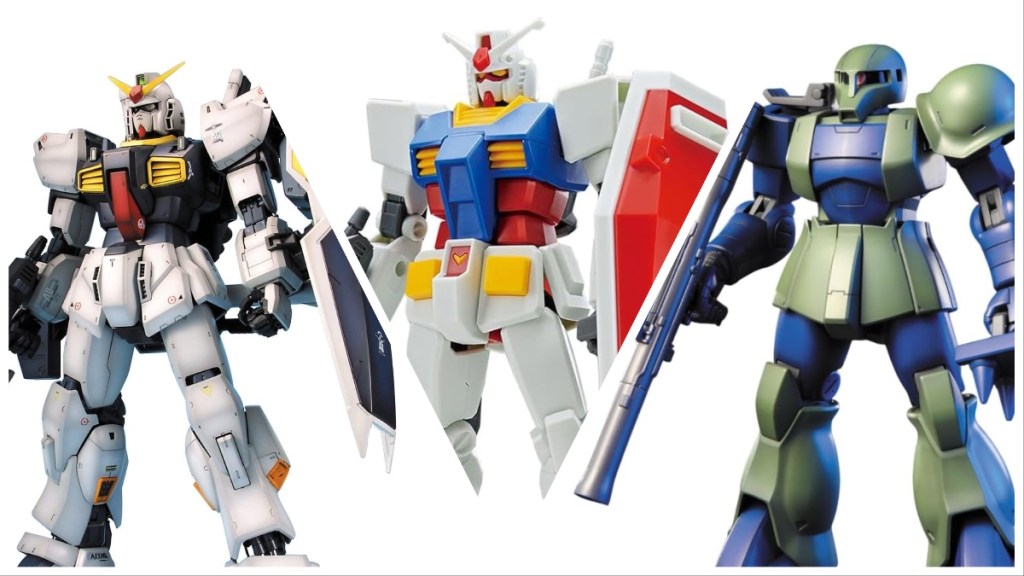
So you’re looking for the best first Gunpla. Odds are, you already know a few things about the hobby, but you have no clue where to begin. Gunpla have been around for 45 years, and there’s an enormous variety from which to choose. Bandai has improved the beginner experience over the years, but it can still be confusing, especially for those living outside Japan.
Choosing your first Gunpla is a personal experience, so we won’t recommend specific models here. Instead, we’ll offer some advice to help you move in the right direction.
Should I start with Entry Grade?
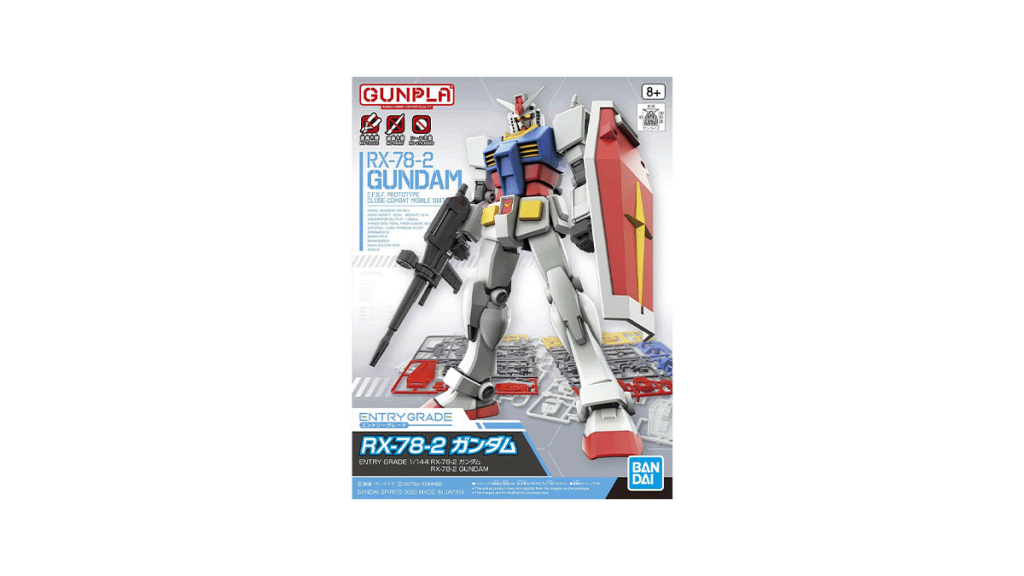
Bandai reintroduced the Entry Grade line in 2020 to produce beginner-friendly models for those looking to enter the hobby. These kits have fewer parts than their High Grade versions and feature thin gates that allow builders to separate pieces from runners without the need for cutters.
Entry Grades are a good first Gunpla for those who aren’t sure if the hobby is for them. Alternatively, these models serve as a great gateway for introducing a friend or loved one to the topic. They’re cheap enough ($10-20) that you won’t feel the burn if you decide Gunpla isn’t for you. However, they only give a taste of what Gunpla has to offer, so if you’re familiar with the process of building a kit and want to jump right in, you might be better off starting with a more advanced grade.
The best first Gunpla is whichever one speaks to you
There are Gundam fans who aren’t interested in Gunpla (and vice versa). However, odds are you’re familiar with the franchise and watching one (or more) of the anime series led you to discover Bandai’s model kits. Fortunately, the majority of every mobile suit shown on screen or in manga has gotten at least one kit. So, do yourself a favor and find one that you’re passionate about.
Whether it’s a suit from your favorite Gundam media or one you just think looks awesome, your first Gunpla should be a kit you want to see completed. The first one I put together was a High Grade Gundam The Origin MS-06R-1A Zaku II High Mobility Type (Gaia/Mash Custom). I saw it on a shelf at Hobby Lobby, and the cool purple and black color scheme spoke to me. It wasn’t the easiest first model, but completing it was a blast and gave me the confidence to seek out other kits.
Every Gunpla can be built by anyone
Gunpla are designed with ease of assembly in mind. Kits vary in complexity, and many have quirks that make them easier or harder to build than their peers. However, Bandai designs them in a way that if you follow the directions in the included instructions, the results will be a finished and functional model. So, barring extenuating circumstances such as physical disability or manufacturing issues, everyone should be able to build (almost) any Gunpla with only a set of snippers.
If you find a model you love and want it to be your first Gunpla, don’t be intimidated if it seems complex. While most people start with High Grades, there’s no reason you can’t jump right in with a more advanced model. If you saw a Master Grade Psycho Zaku and can’t get those big boosters out of your head, or you were inspired by the intricate details of the Perfect Grade Unleashed RX-78-2, then go for it. However, I recommend following the next step before making any purchases.
Research the build
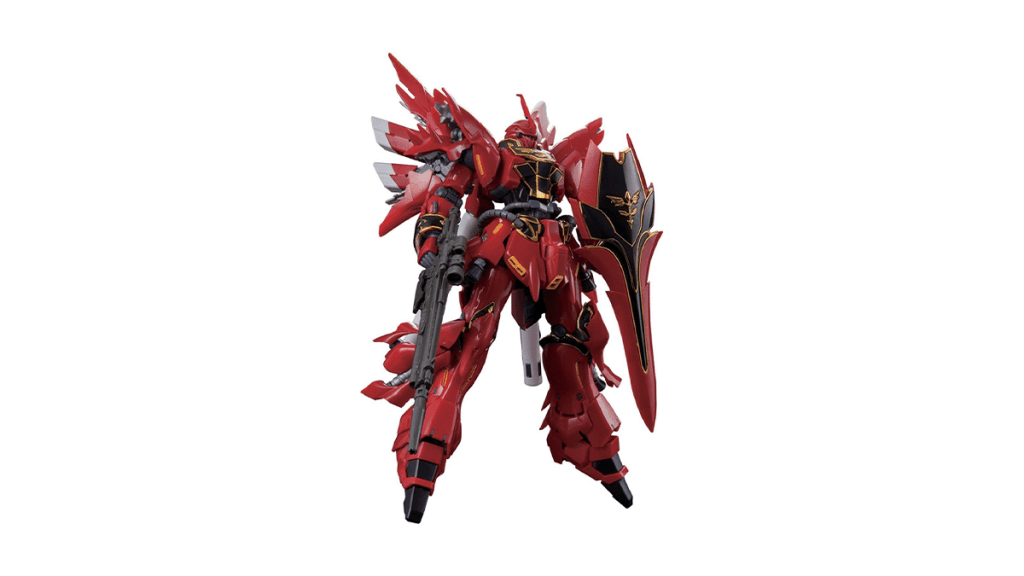
Not all of Bandai’s kits are created equally. While I believe anyone can build any Gunpla with determination, you might not be happy with the end result. You can follow the instructions perfectly, only to find that your model wants to disassemble itself the moment you finish. While everyone should choose a first Gunpla that resonates with them, it’s essential to research any kit you decide to build.
As you build more and more Gunpla, you’ll gain a skill set that allows you to handle some of Bandai’s more notorious mecha. However, until you gain that experience, stick with sturdier models (definitely not the Real Grade Sinanju). Otherwise, you risk getting demoralized through no fault of your own.
Don’t worry about finish for your first Gunpla
There’s potentially a lot more to a Gunpla build experience than parts assembly. While that’s the bare minimum needed to complete a kit, many people enhance their model’s look by sanding away nub marks, panel lining, filling seams, painting, and applying decals. You can choose to do all or none of these things, but for your first Gunpla, I recommend a straight build.
When you’re starting out with Gunpla building, it’s easy to obsess over every little detail and imperfection. However, trying to sand down a kit can bog you down and turn a fun and quick build into a grueling battle. Wait until you’re finished assembling the parts, then go back and do some finishing work. Odds are, you’ll notice that many nub marks are hidden from sight, and you’ll have saved a bunch of time waiting to deal with them.
Don’t judge your first build by someone else’s results
The Gunpla community boasts some amazing artists. These individuals can make simple plastic come to life in a mesmerizing way. It’s incredible how they can take a $20 kit off the shelf and turn it into something so fantastic. Your first one won’t look as good unless you already have a background in modeling or natural artistic talent. Your first build will likely be pocked with nub marks, and the sticker placement will probably be quite rough. That’s fine.
Building Gunpla takes skill, and like with any hobby, the more you do it, the better you’ll get. Take the time to study technique and hone your craft, and you’ll notice that your results will improve.