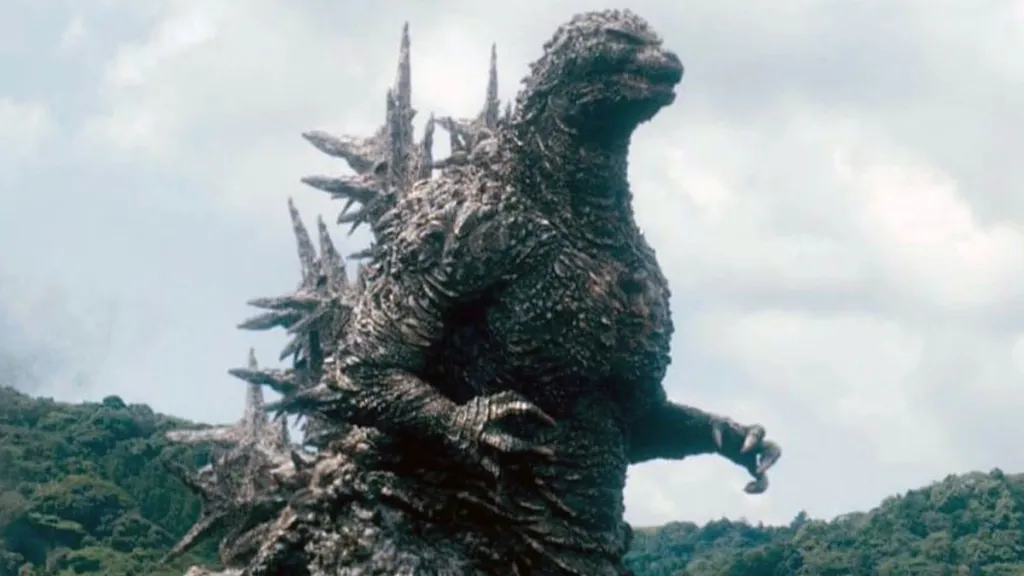
Finding the best Godzilla movie is tough, considering there are 38 of them. Not every single Godzilla film was a hit (or even released in English), so you’ll likely need some guidance if you intend to dip your toe into the franchise for the first time. Fortunately, there’s a good mixture of excellent classic and modern movies that you can jump right into without any preparation.
Best Godzilla movies as of 2025
Since Godzilla was released in 1954, there have been 32 Japanese and 5 American films starring the giant lizard (and his assorted friends). Anti-war sentiments fueled the original movie as a commentary on nuclear warfare. It’s a classic of the monster genre, which isn’t the case for every Godzilla film. Our list contains a handful of the best movies across Godzilla’s various eras, so you can get a taste of how the franchise evolved over time.
Godzilla (1954)
The original Godzilla (Gojira) is one of those classic monster movies that still holds up today and will forever be referenced as a cinematic masterpiece. After a series of ships go missing and coastal attacks in Japan, the source is soon revealed when a prehistoric creature emerges from the waters. Godzilla, now mutated after the effects of nuclear testing, wreaks havoc on Tokyo. At the center of the story is a scientist who comes up with a weapon that could take down the creature, but the weapon’s powers could do more harm than good if it falls into the wrong hands. A critical commentary on nuclear warfare, heavily influenced by the events of Hiroshima and Nagasaki, Godzilla is both a monster film and an anti-war statement.
The whole film carries a sense of devastation that’s hard to describe. It can’t be compared to modern CGI-dosed blockbusters. The giant dinosaur suit may come off as dated or even a bit goofy by today’s standards. Still, there’s a somber quality that’s undoubtedly influenced by the film’s proximity to World War II. And even with its unmistakably 1950s cinematic style, there are too many haunting images to count. The aftermath scenes are heartbreaking. “We’ll be joining your father soon,” a mother says, holding her child. It’s absolutely brutal. Perhaps the best Godzilla movie, this film is a cinematic classic that straddles the line between classic monster films, such as Creature of the Black Lagoon or Night of the Living Dead, and essential post-WWII films by directors including Kon Ichikawa and Akira Kurosawa. If you haven’t watched this one yet, don’t skip it.
The Return of Godzilla (1984)
The Return of Godzilla is a near-perfect start to the Heisei era. However, for anyone confused by the mismatch between Godzilla era labels and actual imperial reign dates, it’s merely a shorthand for fans and critics. Emperor Shōwa technically ruled until 1989. Anyway, I digress.
Directed by Kōji Hashimoto, The Return of Godzilla brings the franchise back to life after being dormant for nearly a decade. Acting as a direct sequel to Godzilla (1954), the film picks up with Godzilla emerging from a volcano, this time even deadlier than before. As the monster heads toward Japan, a series of attacks puts Cold War superpowers at each other’s throats, with both the United States and the Soviet Union suspecting the other of foul play. Soon enough, we find out it’s actually Godzilla causing the attacks, and both nations push for the creature to be taken out by any means necessary, even if that means using nuclear weapons.
The conflict between nations escalates, and a scientist whose parents were killed in the original attacks has to come up with a way to destroy the monster and keep Japan from becoming the target of nuclear destruction once again. Made right in the middle of the Cold War, the film clearly reflects the global tension of the time. The film does a good job of striking a nice balance between seriousness and entertainment. There’s just enough dry humor, with that very 1980s dark tone layered over the whole thing. Another classic in the Gojira canon, this one is a must-watch.
Godzilla (2014)
After a ten-year hiatus from the big screen, Godzilla (2014) pretends the 1998 remake never happened. Instead, it reintroduces the King of the Monsters to a new generation, kicking off what is now known as the “MonsterVerse,” a series featuring Toho creatures from Warner Bros. and Legendary Pictures. Directed by Gareth Edwards, the film opens in Japan, where a mysterious meltdown at a nuclear power plant tears a family apart. Years later, the now-adult son (played by Aaron Taylor-Johnson) returns to Japan after his father (Bryan Cranston) is detained for trespassing in a quarantined zone, still determined to uncover the truth behind the disaster. And from there, things take off.
This is a movie that, truthfully, deserved better sequels. It came out of the gate strong, while the ones that followed have been mediocre at best. The pacing is solid, the effects and designs are impressive, and it pays respectful homage to earlier films while carving out a more character-driven story. It also reshapes Godzilla as more than just a radiation-eating apex predator. The Big G is a creature that exists through no fault of its own, trying to survive. Still, the film presents a moral plea that humanity has been begging for since the Trinity tests.
Shin Godzilla (2016)
Well, we put the bleakest one at the top of the list. Not that bleak equals boring. However, just know that this is a highly satirical commentary on the Japanese government’s sluggish response to the series of disasters in 2011, including the earthquake, tsunami, and the Fukushima nuclear accident. But even with a pitch like that, we’re sold. Give us the commentary!
The movie kicks off with the Japanese Coast Guard investigating an abandoned yacht in Tokyo Bay. The yacht is suddenly and mysteriously destroyed, and the nearby Aqua Line is flooded with blood. It doesn’t take anyone too long to find out what caused the disturbing mess when a freakishly evolving creature begins moving inland, leaving destruction in its wake. Politicians and government agencies scramble to respond, but their efforts are stunted by bureaucracy. And naturally, the United States threatens to deploy nuclear weapons on Japanese soil if the threat isn’t neutralized. It’s up to a group of misfit scientists and civil servants working outside the system to devise a plan to save Japan.
Directed by Hideaki Anno and Shinji Higuchi, with a script by Anno, Shin Godzilla received critical acclaim in Japan, though Western reviews were somewhat mixed. There is a lot of expository dialogue and scenes of politicians shuffling from room to room with more words than action; though, do we really need to ask whether this element feels realistic? But overall, we’d say Shin Godzilla is also a strong homage to the original 1954 film and successfully brings Godzilla into a new era.
Godzilla Minus One (2023)
Written and directed by Takashi Yamazaki, Godzilla Minus One is the first live-action Godzilla film released after Shin Godzilla. Set in 1945, near the end of World War II, the story follows kamikaze pilot Kōichi Shikishima (played by Ryunosuke Kamiki), who lands his plane on Odo Island under the guise of possible repairs. That night, Godzilla attacks the garrison, and Shikishima fails to act before being knocked unconscious. He survives and returns to a now nuclear-devastated Tokyo, haunted by survivor’s guilt. With no military left to protect the people and a traumatized nation barely able to stand, ordinary citizens are forced to confront a nuclear-mutated monster that is ready to destroy what little remains of a war-torn, now decimated Japan.
One of the best-performing Godzilla films to date, with a stellar 99% rating on Rotten Tomatoes, Godzilla Minus One became the highest-grossing Japanese Godzilla movie ever made. In many ways, it’s less a traditional monster movie and more a tragic World War II-era disaster film, where the monster could easily symbolize something bigger than a mutant dinosaur. The real focus isn’t even Godzilla — it’s Shikishima, a devastated, grief-stricken pilot trying to navigate the next catastrophe after already losing everything he holds dear. While undeniably a kaiju movie, it’s also a meditation on the resilience and spirit of the Japanese people and their ability to endure. The film also stars Minami Hamabe, Yuki Yamada, Munetaka Aoki, Sakura Ando, Hidetaka Yoshioka, and Kuranosuke Sasaki. A sequel is already in the works, helmed by Yamazaki.
How we chose the best Godzilla movies
As with every best-of list, favorites are subjective. But we generally tried to narrow it down to the standout film from each major era, though the Millennium era didn’t quite make the cut. Still, these picks have left a lasting mark on movies and moviemaking, while continuing to honor the monster genre and political dialogue first introduced in Godzilla (1954).



![Wolverine Has a Big Quest With [Spoiler] in Avengers: Secret Wars — Report](https://www.superherohype.com/wp-content/uploads/sites/4/2026/08/MixCollage-11-Aug-2026-08-55-AM-2026.jpg?w=182&h=122&crop=1)