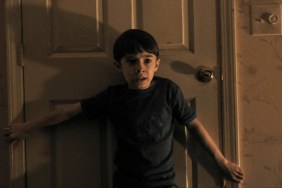
Zach Cregger’s Weapons movie is a lot of things. It’s a fascinating look at some colorful characters who make up a little town. It’s really scary and intense. And then, suddenly, it’s also really funny.

Some have tried to argue that the buck stops there and that there isn’t anything more on Weapons’ mind beyond that. This, however, isn’t a great read on the movie; there are tons of themes and messages buried within Weapons (as there are in all art). And one of these themes seems to be an allegory for school shootings.
Why some fans theorize that Weapons is an allegory about school shootings
There are plenty of reasons why Weapons can be interpreted as an allegory about school shootings, especially in the first half of the movie. The whole premise of the film is that a classroom of children is suddenly gone. Nobody knows why this happened. That’s a concept that sadly sounds far, far too familiar in 2025.
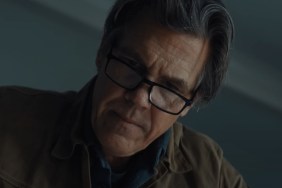
From there, we watch a community tear itself up while searching for answers. Josh Brolin’s character needs to know why this is happening and decides to take out that frustration on the teacher, played by Julia Garner. And the police are pretty incompetent in this whole situation; they don’t have any answers, either, but they refuse to let anyone else in regarding the case, and then ultimately end up standing in the way of their own investigation.
Some have read into the 2:17 a.m. disappearance time being a nod to the 2022 assault weapons ban that got 217 votes in Congress and then died, while others believe the Gladys character to represent Alex’s survivor’s guilt/PTSD.
Then there’s the whole conversation around the AK-47 that floats above the house in Brolin’s dream, which could mean one of several things. Maybe it’s vividly stating that this movie is truly about school shootings and gun control. It could also just be a random moment that’s supposed to elicit a ‘what the f—?!?’ moment like Brolin has. Cregger, himself, told Variety he doesn’t even fully know what it means and thinks “it’s just cool” that people are going to interpret it differently.
Cregger leaves the meaning of Weapons open to interpretation
We can argue and debate over how effective an allegory it actually is, especially when we get into the twists and answers that arrive in the second half of the film. TheWrap’s William Bibbiani has a really good piece about why Weapons’ revelations undercut the themes. Den of Geek’s Joe George, meanwhile, recently wrote about why the movie’s jarring ending is what ultimately ties the whole thing together.
The main point here, though, is that Weapons doesn’t offer any easy answers. One person can interpret the movie one way. Someone else can interpret it in an entirely different way. Cregger isn’t asking audiences to see eye-to-eye and come to any kind of consensus with this one; rather, we’re being told a story and then have to fill in the blanks ourselves as to what it all means and what happens next. The final moments of Weapons very purposefully don’t wrap things up; we don’t know what happens to the children and this community, nor do we know if Alex’s new living situation is any better than his last.
And doesn’t that sound at least a tad bit like modern-day politics? Something terrible happens. The left interprets it one way. The right interprets it differently. Without any definite answers as to why these things happen, we spend all our energy and resources arguing with one another, trying to prove who is right. There’s no significant way that you, I, or any one person can change that.
To make a movie that addresses these themes, but then definitely comes to some sort of conclusion, would be disingenuous. The messy ambiguity is the whole point.