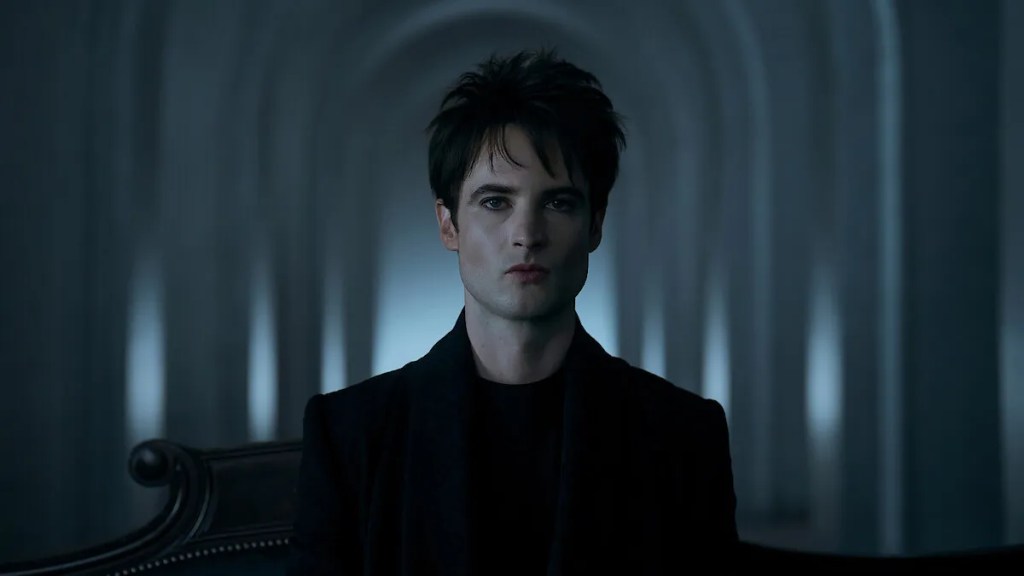
Netflix’s The Sandman Season 2 closes out on a powerful and poetic note—literally.
After the emotional weight of Morpheus’ death and Daniel Hall’s rise as the new Dream, Episode 11 of Volume 2 sneaks in one final post-credits scene. The moment brings back the enigmatic Kindly Ones, also known as the Fates, as they sip tea and crack open a fortune cookie.
What follows is a cryptic poem that might sound simple but carries layers of meaning tied to the entire arc of the show. Fans can’t stop talking about what those final lines mean and how they wrap up The Sandman’s biggest themes.

What Fate’s poetry means in The Sandman Season 2 post-credits scene
In the post-credits scene of The Sandman Season 2, Episode 11, the Kindly Ones return for one last eerie moment. They sit in their home, munch on biscuits, and split a fortune cookie—just like they did in earlier episodes. But this time, the message inside isn’t about kings or war. It reads:
“Flowers gathered in the morning;
Afternoon, they blossom on;
Still are withered in the evening;
You can be me when I’m gone.”
The poem comes directly from The Sandman Vol. 9: The Kindly Ones. While one of the Fates casually dismisses it as “a bad poem,” its meaning digs deep into the heart of the series. The post-credits scene speaks directly to the life-death-rebirth cycle that plays out across The Sandman Season 2, from Morpheus’ tragic end to Daniel’s emergence as the new Dream.
This isn’t the first time the show has hinted at the inevitability of change. In the same episode, Despair reflects on the former Despair who came before her. Delirium, too, used to be Delight. The Endless are not immune to transformation, and the poem subtly reinforces that. “You can be me when I’m gone” isn’t just about Morpheus—it’s about all of them. Every Endless can fall, fade, and be replaced.
As Daniel steps into the role of Dream and the world of the Endless moves forward, the post-credits scene delivers a soft yet lasting punch. Even in a realm where gods and concepts rule, no one is immune to the passage of time.