There are many superheroes who have stood the test of time, seeing continuous publication for most of the past century. Then there are the oddballs. The outliers. The superheroes who might have merited an award or an action figure, but whose comic books were often cancelled almost as soon as they were announced. These cult classic comic book characters may not be famous, but they have cultivated an odd sort of respect.
What defines a Cult Classic Comic Book?
Cult classics are a hard thing to quantify. Some think a true cult classic has to be ignored by the majority of fans and not just the general public. Others think some sort of longevity is required. To them, a true cult classic series (much like their superhero stars) must defy the odds and keep going, no matter what. The journey may take decades and send them bouncing between publishers, but they still keep trying. The following list tries to keep both ideals in mind.
Flaming Carrot

Most big American cities have whole teams of costumed mystery men and women to protect them. Yet in the Iron City suburb of Palookaville, there is but one masked hero to stand against the forces of evil. He is known as the Flaming Carrot and his deeds are as legendary as they are weird.
The Flaming Carrot has no super powers. However, he has an impressive arsenal including a nuclear-powered pogo-stick and a utility belt filled with sneezing powder and laughing gas. He can also enter a state of “Zen Stupidity” that gives him the courage to face perils that are nearly as insane as he is. He reportedly mastered this skill after reading 5,000 comic books in a single sitting and suffering irreversible brain damage.
The creation of Bob Burden, the Flaming Carrot has come far since his first appearance in a program for the 1979 Atlanta Fantasy Fair. Several independent publishers have handled the “Ut!” exclaiming vigilante over the years, including Aardvark-Vanaheim, Dark Horse Comics, Image Comics, and Renegade Press. Despite this, and crossovers with the likes of the Teenage Mutant Ninja Turtles and Cerebus, the Flaming Carrot continues to be an independent icon and iconoclast. As Burden once put it, “Flaming Carrot was to the regular superheroes what Huckleberry Finn was to Tom Sawyer.”
Damage Control
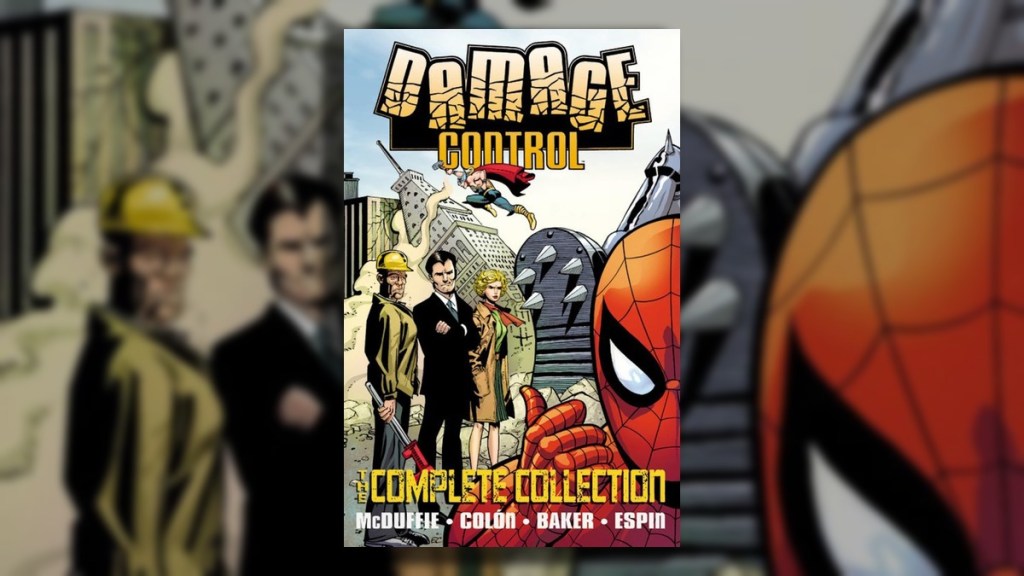
Back in the olden days before the MCU, readers of Marvel Comics often asked how Manhattan got rebuilt so quickly. This was a fair question given how one menace or another would trash NYC. And yet, the major landmarks would be in pristine condition just in time for the next alien invasion. This was revealed to be the work of the construction firm known as Damage Control.
Overseen by Director Anne Marie Hoag, Damage Control was co-owned by both Tony Stark and Wilson Fisk. Iron Man and Kingpin did not agree on much, yet could work together to see their city being rebuilt after every natural (and unnatural) disaster. However, the employees of Damage Control also worked to avert crises before they could start. Perhaps the most famous instance of this was their stopping a fight between the New Warriors and Hulk at Yankee Stadium.
The brainchild of writer Dwayne McDuffie and artist Ernie Colon, Damage Control was ahead of its time in many respects. It was one of the first comics to explore the idea of logistics in a society with superheroes. This has become commonplace in post-modern superhero media, with several comics based around how superpowers would change the real world. None of them, however, have managed it with as much depth or humor as Damage Control.
There is some irony to how the Damage Control comics lean on their comedic premise, given their portrayal in the MCU. As of MCU Phase Six, Damage Control has taken on a sinister edge. Moving beyond construction, the group now manages prisons for superpowered people. This is a far cry from the classic comics, which were built around ideas like billing Doctor Doom for the damage his last battle with Reed Richards inflicted on Manhattan.
Starman (1994-2001)

In the beginning, there was Ted Knight; a respected astronomer and engineer. Secretly, he was also the superhero Starman, who harnessed a unique cosmic radiation to fight crime. When Ted retired and revealed himself to the world, there was little doubt that his eldest son, David, would take up his mantle.
David Knight was a scholar/athlete who looked to the future, just like his father. He was also dead after one week on the job, killed by a sniper’s bullet. This kicked off a crimewave facilitated by Starman’s archenemy, The Mist, and his own son.
With Ted Knight hospitalized, there was only one person who could use his DNA-locked technology. His youngest son, Jack, who was an unashamed geek, aspiring artist, and somewhat estranged from his family. Reluctantly, Jack agreed to be the beacon needed in Opal City’s darkest hours. However, Jack unexpectedly came to embrace his father’s legacy and forged a lineage made up of the other heroes who called themselves Starman.
DC Comics published comics with several heroes called Starman over the years. However, there was no common link between them. The 1994 Starman series created that shared mythology. However, it also became a rebuttal of the ethos of the Dark Age of Comics.
On the surface, Jack Knight appeared to be a slacker anti-hero typical of the era. Instead of a cape and tights, he wore goggles and a leather jacket. However, the new Starman’s heart was pure Golden Age idealism under his snark. Jack’s journey explores how being a hero and being a good person are not necessarily the same thing, even as he slowly matures into both.
Howard the Duck

The name of Howard the Duck has a number of connotations in popular culture. Most recall the 1986 film that was the first feature-length film based on a Marvel property and a box office bomb. Some will think of his cameo appearances in the MCU, voiced by Seth Green. Few, however, recall the comic books that started it all.
Howard first appeared in 1973’s Adventure into Fear #19. He was one of many multiversal refugees to cross paths with Man-Thing. Howard’s snarking about the insanity of the horror around him proved popular, leading to more appearances and his own solo series in 1976.
“Trapped in a world he never made,” Howard tried to build a normal life for himself on Earth. Unfortunately, fate (and writer Steve Gerber) kept throwing him against various weird villains. This included the likes of the bell-headed Dr. Bong and Sudd, “The Scrubbing Bubble That Walks Like A Man!”
Howard the Duck’s first solo series only lasted 31 issues, before being rebranded into a more mature comic magazine. That only lasted 9 issues, There was also a short-lived newspaper strip. Sadly, Gerber’s legal battles with Marvel sent the character into obscurity, even as Hollywood was already working on his movie.
Since that time, Howard has made a few cameos in various comics, usually teaming with other comedic heroes like She-Hulk and Squirrel Girl. His solo series was also revived a few times, most recently in 2015. However, despite a firm following among fans of satiric comic books, Howard remains a B-list bird.
Hitman (1996-2001)
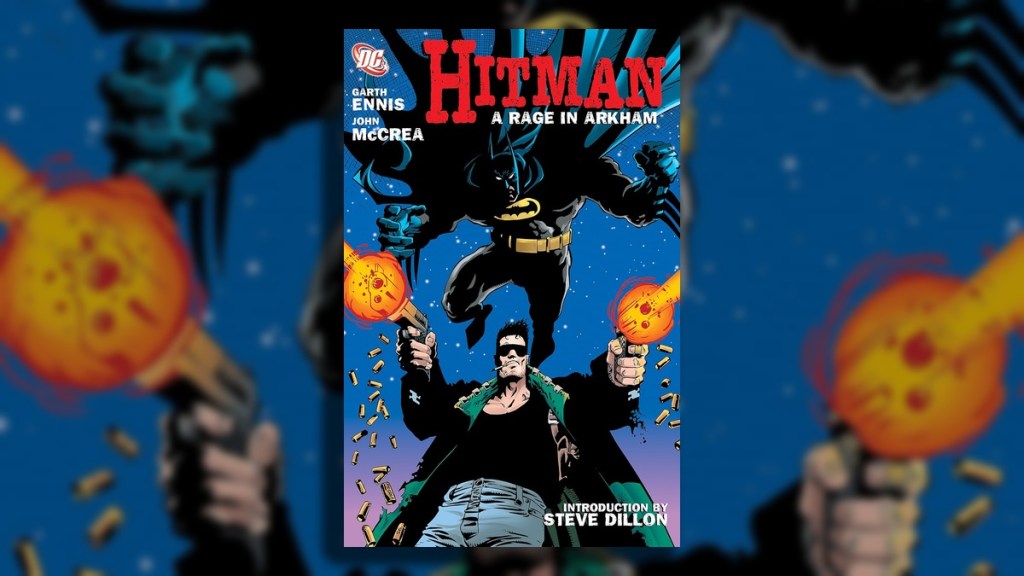
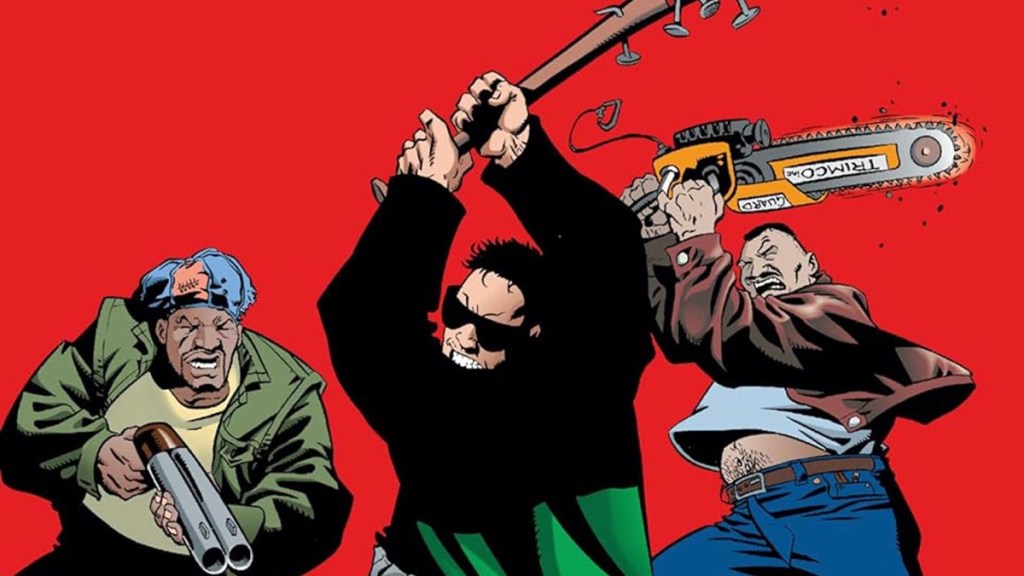
As a Marine, Tommy Monaghan was praised for his combat skills. Fighting and killing came naturally to him as a native of the rough Gotham City neighborhood known as “The Cauldron.” When his tour of duty ended, he fell into the life of a typical contract killer. However, after the bite of an alien parasite triggered his metagene, Tommy became an atypical Hitman.
Armed with telepathy and x-ray vision, Tommy rebrands himself as a specialist in killing superhumans and supernatural threats. However, Tommy prefers to rely on his combat skills and improvisational abilities. All these serve him well, as he faces threats including gods, dinosaurs, and zombie sea animals.
Hitman is widely regarded as one of the greatest comics few people have ever read. It is packed full of the dark humor that co-creators Garth Ennis and John McCrea are famous for. And yet, Hitman won the 1999 Eisner Award for Best Single Issue. This was presented for the uncharacteristically optimistic story “Of Thee I Sing” in Hitman #34, in which Tommy has a surprisingly touching conversation with Superman.
How we chose the best Cult Classic Comic Books
Given that this site is SuperHeroHype, the main criteria for this list was comic books that feature superheroes or were superhero adjacent. Beyond that, the main criteria was series that have devout followings, but never served as the focus of a successful adaptation. While Damage Control and Howard the Duck are embedded in the MCU, neither have headlined a series or movie.
One final criteria is that there had to be at least one trade paperback collection of some of the characters’ adventures. Sadly, this eliminated some truly great cult classic heroes like DC’s Ambush Bug. While undoubtedly a cult classic superhero, Ambush Bug has yet to get an omnibus edition collecting his many short-lived miniseries.