The best DC animated movies prove it’s not just the live-action films that play for keeps. We’d actually argue that some of DC’s animated movies outrank their features and TV series altogether, though it’s not necessarily hard to surpass Steel (1997) starring Shaquille O’Neal. If you’re looking for a roundup of the best animated comic adaptations, here are our picks for the best DC animated movies.
Best DC animated movies as of 2026
We wanted The Killing Joke to be one of the best since it’s one of our favorite stories, but the redemption in the film’s latter half and its faithfulness to the source material couldn’t outweigh the rough first half. Talk about a letdown. Still, there are plenty of other great animated DC films that earn their place on the list without question. Here are our top picks.
Batman: Mask of the Phantasm (1993)
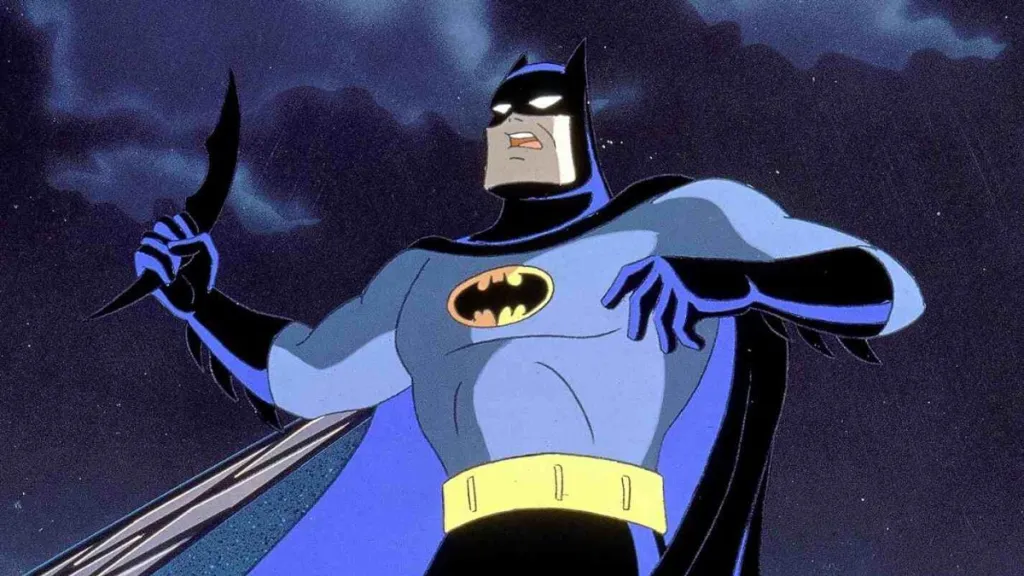
Set within the world of Batman: The Animated Series, Mask of the Phantasm follows a younger Bruce (voiced by Kevin Conroy) who is torn between his commitment to Gotham and a potential life with Andrea Beaumont (Dana Delany), arguably Batman’s greatest love interest. When a mysterious vigilante known as the Phantasm begins assassinating Gotham’s crime bosses, Batman is blamed for the murders and forced to confront a dangerous new enemy. Of course, the personal is always central to any Batman story.
In this case, we see just how shackled our vigilante hero is to the murder of his parents, how tied he is to a childhood oath of revenge, and how this vow can complicate any chance he has for happiness. It’s tragic, beautifully animated, dark, and is easily one of the best Batman Year One stories. Even though it was released in 1993, this movie stands the test of time and ranks among the greatest Batman movies.
Green Lantern: First Flight (2009)
Test pilot Hal Jordan is chosen by a dying alien to become a Green Lantern, joining an intergalactic police force that protects the universe. He’s taken to the planet Oa to train with the Green Lantern Corps, where he’s mentored by Sinestro. However, Hal discovers that Sinestro has been secretly working against the Corps. When Sinestro steals the yellow power and becomes a dictator, Hal must prove himself as a true Green Lantern by stopping his former mentor and saving both the Corps and the galaxy from Sinestro’s authoritarian rule.
This movie delivers a proper space adventure that feels epic. Rather than keeping Hal Jordan Earth-bound, it takes viewers on a journey across the galaxy. Unlike many superhero origins that get bogged down in setup, First Flight streamlines Hal’s journey. It covers his recruitment, training, and first major mission in a cohesive narrative. The film presents Sinestro as a mentor figure whose authoritarian methods gradually reveal his true nature. His fall from respected Lantern to dictator feels real and tragic. The movie does excellent work establishing the Corps as a galactic police force with its own culture, hierarchy, and politics. Christopher Meloni brings the right mix of cocky confidence and underlying heroism to Hal Jordan. Victor Garber makes Sinestro both charismatic and menacing. The action feels distinctly Green Lantern.
Batman: Under the Red Hood (2010)
If you find your way into any serious (or half-serious) forums on the subject, you’ll have a great time reading fans spar over whether Under the Red Hood or Mask of the Phantasm takes the title for the best animated Batman movie, period. Adapted from the Batman storyline “Under the Hood” from Judd Winick, Batman: Under the Red Hood is already primed for success as one of the darker Robin stories. Still, the film Under the Red Hood truly launched the Jason Todd hype era of the early 2010s, even years after the comic’s release. We’ll have to give credit partly to Jensen Ackles’ voiceover performance here — absolutely fantastic.
The film takes us back to the violent death of Jason Todd at the hands of the Joker, a tragedy that Batman didn’t save him from. Five years later, a masked vigilante known as the Red Hood is Batman’s newest challenge, who has a similar vigilante style and is cleaning up Gotham City, except without a moral code. While the story itself is fairly entertaining for Batman fans, the film’s best part is its incredible cinematic storytelling. It’s a great film for animation fans, and the creative team went all out with this one. A stacked voice cast, including Jason Isaacs, Bruce Greenwood, John DiMaggio, Neil Patrick Harris, and Wade Williams, only adds to the movie’s strengths.
Justice League: Crisis on Two Earths (2010)
A good version of Lex Luthor from a parallel Earth comes to our world, asking the Justice League for help. On his Earth, the evil versions of the Justice League, known as the Crime Syndicate, rule the world as supervillains. The Justice League travels to this alternate Earth to help the few remaining heroes. The main threat comes from Owlman, the evil version of Batman, who believes that nothing matters because infinite parallel worlds exist. The Justice League must stop the Crime Syndicate in a battle that could end all existence across every possible universe.
This movie explores the concept of a parallel Earth, presenting Earth-3, where the Justice League are villains. While the story grapples with questions about free will and destiny, it’s Owlman’s nihilistic, existentially fraught worldview, which is rarely seen in animation, that makes this downright compelling. James Woods delivers a chilling performance as Owlman. He is one of DC animation’s most memorable antagonists. The film gives meaningful development to Justice League members like Martian Manhunter, too. It respects viewers’ intelligence while delivering solid entertainment. The film asks what makes heroes heroic and whether our choices truly matter in an infinite multiverse.
Batman: The Dark Knight Returns Part 1 and 2 (2012)
Technically a two-fer — that is to say two movies we’re categorizing as one for this top ten list — an aging Bruce Wayne comes out of retirement after 10 years to become Batman again. Gotham is overrun by a violent gang called the Mutants. Batman struggles with his age but eventually defeats the Mutant leader and inspires a new Robin, a teenage girl named Carrie Kelley, to join him. The government tries to stop Batman’s return. The Joker emerges from his catatonic state and goes on a killing spree. After Batman stops him, the government sends Superman to force Batman to retire. The two former allies fight in an epic final battle, with Batman using all his cunning and preparation to take on the Man of Steel.
These films adapt Frank Miller’s seminal 1986 comic series. Miller’s story redefined Batman, presenting an older, grittier Dark Knight. The animation preserves both the complexity and visual style that made it so influential. Unlike superhero animations aimed at younger audiences, these movies embrace adult themes. The story doesn’t shy away from violence or moral ambiguity, creating a more complex Batman. Additionally, the cast is incredible. Peter Weller brings gravitas to an older Bruce Wayne.
Justice League: The Flashpoint Paradox (2013)
The Flash travels back in time to save his mother from being murdered when he was a child, but this change creates a completely different timeline where Bruce Wayne dies instead of his parents. Wonder Woman and Aquaman are at war, destroying the world; Superman never became the hero we know, and the Justice League never formed. Realizing his mistake, Flash must find a way to restore the original timeline, even though it means letting his mother die again. With help from this world’s darker Batman and other altered heroes, he races to fix what he broke and save both timelines.
The film tackles the concept of timeline alteration without dumbing it down. When Flash tries to save his mother by preventing her murder, he creates a butterfly effect. Rather than just surface-level changes, Flashpoint shows a completely different world. These aren’t gimmicky swaps but logical consequences of how history might unfold differently. At its heart, this is about Barry Allen’s relationship with his mother and his struggle with grief. The film grounds its premise in emotion. The movie doesn’t shy away from violence and moral complexity. This alternate world is genuinely darker and more brutal. The film makes clear that even well-intentioned changes to the past can have catastrophic consequences. Justin Chambers delivers an excellent performance as Flash.
Batman: Assault on Arkham (2014)
The government assembles the Suicide Squad for a secret mission to infiltrate Arkham Asylum. Their job is to retrieve vital information from the Riddler, but the mission quickly goes wrong. As the Squad fights to survive and complete their mission, Batman arrives to stop both the villains and the Joker’s deadly rampage. The team must work together despite not trusting each other, all while avoiding Batman and dealing with bombs implanted in their necks that will kill them if they disobey orders.
Rather than being a traditional Batman movie, this film casts the Suicide Squad as the protagonists, with Batman serving more as an antagonist. This perspective allows for a grittier, more morally complex story where the “heroes” are actually villains on a mission. The movie embraces its PG-13 rating fully, featuring violence, sexual content, and adult themes. Characters like Harley Quinn and Deadshot are portrayed with psychological depth and realistic motivations. The interpersonal relationships between Squad members drive much of the drama. Using Arkham Asylum as the primary location is brilliant; it’s claustrophobic, filled with dangerous inmates, and provides natural chaos. The setting almost becomes a character itself. Positioning Batman as someone the audience roots against is also a fun narrative choice.
Justice League: Gods and Monsters (2015)
If you’re dipping in and out of DC’s animated catalog, Justice League: Gods and Monsters is one that tends to catch people off guard. It doesn’t usually dominate the same debates for best DC animated movie as Under the Red Hood or Mask of the Phantasm, but it has its own cult following.
Set in an alternate universe, Gods and Monsters reimagines the Trinity in a way that’s a lot darker, and frankly, a lot weirder than what we’re used to. It’s not the Crisis on Two Earths, either. This isn’t your standard Superman, Batman, and Wonder Woman lineup, or even their villain alter-egos. Superman, AKA Herman Guerra (Benjamin Bratt), is the son of General Zod but was raised by Mexican immigrant parents rather than Martha and Jonathan Kent. Batman, AKA Kirk Langstrom (Michael C. Hall), is a scientist-turned-vampire after an experiment intended to cure him of cancer, and Wonder Woman, AKA Bekka (Tamara Taylor), comes from a much more brutal version of Themyscira. The three still take on crime, but they lack the same moral code we know them for. They’re not exactly opposed to having a body count on their record.
The story follows this version of the Justice League, which functions more like a feared enforcer force than heroes. This ultimately puts them under heavy scrutiny when a series of high-profile scientists are murdered, and the deaths look similar to the methods of our superheroic trio. Despite the hesitation from some fans at another what-if storyline, you’ll have to trust us when we say this film manages to get it right. Gods and Monsters is a swing on par with the 1927 New York Yankees.
Superman: Red Son (2020)
In Justice League: Gods and Monsters, an alternate universe saw Superman raised by Mexican-immigrant parents and taking on the persona of Hernan Guerra. In this Elseworlds adaptation of the Mark Millar comic, Superman (voiced by Jason Isaacs) lands in the Soviet Union. He was raised there, where he discovered his powers just after WWII. As he grows to adulthood, he uses his powers to serve the state in the 1950s. While it’s certainly a superhero comic adaptation at its core, the story is packed with geopolitical questions that make it not only entertaining but philosophically compelling. Superman has long been a symbol of American justice, ever since the TV series gave him the motto “Truth, Justice, and the American Way” in 1952, at the height of the Red Scare.
Flipping the script to make him the hero of the Soviet Union is quite the subversion, and it begs the question of who a hero might be, depending on which flag to which they pledge allegiance. Or if our perspective on what a hero is changes depending on which version of justice is being served. Or maybe it’s simply an examination of nature vs. nurture. Though the animated version does stray from the comics a bit and does suffer from the complexity of the arc being chopped and crammed into less than 90 minutes, Red Son is still arguably one of the best DC animated movies. It’s polarizing, too, but it’s on our list for its boldness.
Watchmen Ch. 1 (2024)
When Watchmen Ch. 1 first came out, we weren’t sure how it would go or whether it could free itself from the connection to Zack Snyder’s 2009 version. Or frankly, even the HBO limited series. Fortunately, the animated adaptation, directed by Brandon Vietti and written by J. Michael Straczynski, is a solid adaptation of the original material that holds its own entirely. Pulled straight from the pages of Watchmen by Alan Moore and Dave Gibbons, the movies are set in a version of 1980s America. The story follows a group of former vigilantes as they’re pulled out of retirement and back into each other’s orbit after the murder of a government-sponsored hero, leading Rorschach to investigate a possible conspiracy targeting masked heroes.
Aside from not messing around with the source material too much, these two chapters take a much more faithful approach than most DC animated films, and actually attempt to capture the comic as originally intended, including in the animation. That, of course, is a benefit to animated film as a medium entirely, in that it’s easier to replicate the comic style and tone when you’re moving from one illustrated form to another.
Still, the creative team here didn’t even try to push further away from the comics, opting instead to pull closer to the story and feel. That’s not to say they didn’t make any creative leaps here, particularly with some aesthetic choices. Not as far as Snyder’s blue-tinged world, but definitely in some other ways. While the 3D animation is gorgeous, the team is clearly paying homage to the comic’s 80s tone and color scheme here. While the film isn’t an exact one-to-one, it’s pretty close.
How we chose the best DC animated movies
Though the quality of DC animated films varies widely, there is no shortage of great adaptations. The best are able to translate the best comic stories or creatively and meaningfully reinterpret the material to suit the medium of animated film. We considered which films were able to manage the strongest adaptations through writing, animation, editing, directing, and voiceover acting. We also considered animated DC movies that received the best fan and critical consensus.