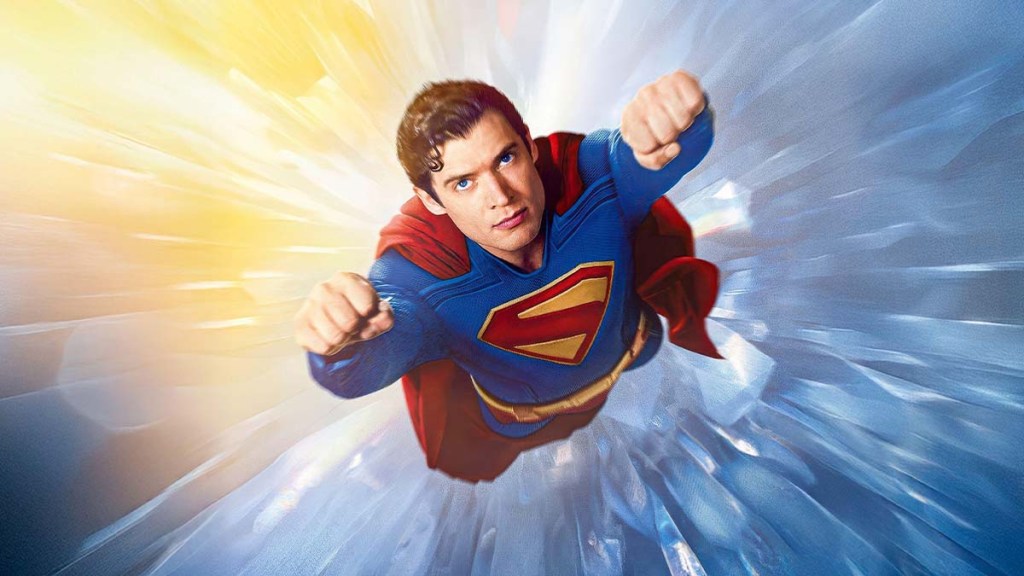
Despite Superman’s rocky track record on the big screen, the character remains iconic enough to be brought back time and time again. And whether or not you enjoyed the most recent take on the Man of Steel, there’s still more ahead with James Gunn’s vision for the character. So, if you’re planning a full rewatch, here’s the best Superman movie watch order
What is the best order to watch the Superman movies?
Generally, we recommend watching any movie franchise in release order. While this list does follow that approach, we’ve broken it down by Superman eras to make the viewing journey more straightforward.
As a note, there’s also an entire Superman animated list worth checking out. We won’t get into that in-depth here, but here’s the list for you superfans.
- Superman: Brainiac Attacks (2006)
- Superman: Doomsday (2007)
- Superman/Batman: Public Enemies (2009)
- Superman/Batman: Apocalypse (2010)
- All-Star Superman (2011)
- Superman vs. The Elite (2012)
- Superman: Unbound (2013)
- The Death of Superman (2018)
- Reign of the Supermen (2019)
- Superman: Red Son (2020)
- Superman: Man of Tomorrow (2020)
- Batman and Superman: Battle of the Super Sons (2022)
Christopher Reeve Era
Superman: The Movie (1978)
Taking it back to the first and arguably best Superman movie, this 1978 release set the standard for the Superman character. Sure, some bits feel like a lot, particularly Marlon Brando’s wig and gold Rolex when Jor-El puts a baby Kal-El on the spaceship. But overall, the movie is equal parts epic and charming, and has the right amount of comedic timing from a fantastic Christopher Reeve.
Directed by Richard Donner, the film tells the definitive origin story: Clark Kent, sent from his dying planet to Earth, grows up in Kansas under the care of his adoptive parents, who soon realize their son is extraordinary. As Clark discovers his heritage, he must embrace his destiny and become Superman.
Superman II (1981)
Despite director–studio conflicts that led to Richard Donner’s dismissal before production wrapped (Superman: The Movie and Superman II were filmed simultaneously), Richard Lester stepped in to finish the film. Remarkably, Superman II is still one of the stronger entries in the Christopher Reeve era.
After the events of the first film, Superman faces a new threat when General Zod, Ursa, and Non — three Kryptonian criminals imprisoned in the Phantom Zone — are accidentally freed and arrive on Earth. With powers equal to Superman’s, they quickly set their sights on conquering the planet and forcing humanity to kneel before Zod. Things are complicated, however, by Superman’s relationship with Lois Lane, which causes him to choose as he’s torn between his identity as a hero and the desire to live an everyday life.
Superman III (1983)
This is where things start to get weird. Superman III takes a dramatic tonal shift, often veering too far into camp and slapstick in ways that don’t always feel cohesive. It’s not so much a deliberate mix of comedy and seriousness as it is a film that struggles to find the right balance. Still, if you enjoy camp and slapstick, this might be right up your alley.
Directed once again by Richard Lester, the film introduces comedian Richard Pryor as Gus Gorman, a bumbling but brilliant computer programmer. Hired by wealthy tycoon Ross Webster, Gus is tasked with using his skills to manipulate the world’s economy, starting with an absurd plot to seize control of Colombia’s coffee supply. Superman foils this plan, but things escalate when Webster orders Gus to synthesize Kryptonite. Then we get a bizarre time when the corrupted Kryptonite doesn’t kill Superman, but instead splits his personality.
Supergirl (1983)
Supergirl, the fourth installment in the Superman movie series, lost $21 million at the box office. This one is almost worth pretending it never happened. But alas, it did, so it’s going on the list.
Kara Zor-El (Helen Slater), Superman’s cousin, lives on a Kryptonian colony called Argo City. When the evil witch Selena (Faye Dunaway) steals the powerful Omegahedron, a device that maintains Argo’s life support, Kara is forced to journey to Earth to retrieve it. On Earth, Kara goes undercover, taking on the identity of “Linda Lee.” She enrolls in an all-girls school, makes a new bestie named Lucy Lane, and strikes up a romance with the school groundskeeper, Ethan, who the evil witch also has the hots for. And of course, Kara must embrace her powers and stop Selena from using the Omegahedron to gain ultimate power.
Superman IV: The Quest for Peace (1987)
Christopher Reeve’s final outing as Superman, The Quest for Peace, did its best to go out with a bang, but instead closed this era with a fizzle and a whiff. Once-great storytelling feels lost amid weak writing, lackluster performances, and uninspired special effects. It’s genuinely a depressing watch.
The story has Superman confronting the growing threat of nuclear war by attempting the monumental task of ridding the world of all nuclear weapons. Not a bad idea, but he aims to do this by hurling them into the sun. Superman’s mission is complicated when Lex Luthor returns, creating a powerful new adversary: Nuclear Man, a being forged from Superman’s own DNA and powered by the sun.
Super/Man: The Christopher Reeve Story (2024)
Not technically a Superman movie, but we’re including this because it’s a fantastic watch. This documentary offers an intimate look at the life and legacy of Christopher Reeve, who rose from relative obscurity to become the iconic Man of Steel. It also covers the tragic horseback-riding accident that left him paralyzed, the inspiring story of resilience. Reeve devoted the rest of his life to advocating for spinal cord injury research, becoming a true hero both on and off the screen.
Bryan Singer Era: Superman Returns (2006)
Moving on to the sole film of the Bryan Singer era — though calling it an “era” is a stretch with just one movie — Superman Returns performed admirably, earning solid ratings from both fans and critics. Credit goes to Brandon Routh, who stepped into the role with the same charm and heroic bravado that made Christopher Reeve iconic. While Routh brings his own style to the character, it’s clear he’s also paying homage to the original Superman.
After the misfire of The Quest for Peace, it took nearly two decades and several false starts before another Superman movie hit theaters. Superman Returns aimed to breathe new life into a franchise that had faded from public enthusiasm. Picking up directly after the events of Superman II, the film follows Superman as he returns to Earth after a five-year absence spent searching for remnants of Krypton. On arrival, he discovers that Lois Lane is engaged and has a five-year-old son. And, as always, Lex Luthor is scheming behind the scenes.
DC Extended Universe
Man of Steel (2013)
Zack Snyder takes over and starts his run at the helm of the Superman movies. Kicking things off is Man of Steel, a VFX-heavy reimagining of Superman’s origin. So while the plot is somewhat the same — destroyed planet, superbaby sent from space, that whole thing — Snyder’s take doesn’t diverge from what, but in the way it happens. And Man of Steel has a very different tone from the Christopher Reeve era. Henry Cavill also doesn’t try to channel the original Kal; he’s got his own thing going on.
While we can appreciate the darker tones of superhero movies — Christopher Nolan is a producer on this one, there’s definitely a Nolan-esque sensibility here — it does make you miss the spunk and charm of the originals.
Batman v Superman: Dawn of Justice (2016)
If you were confused about Ben Affleck playing Batman, so were we. But he does a solid job in Batman v Superman: Dawn of Justice, which brings us a showdown between Batman and Superman where Batman absolutely pummels Superman. The story is drawn from Frank Miller’s The Dark Knight Returns, with Lex Luthor scheming and manipulating the two heroes against each other.
While the film did very well at the box office, it received mixed reviews from both fans and critics. Still, between Man of Steel and Batman v Superman, Snyder had laid the groundwork for his vision. And with this 2016 superhero crossover — Wonder Woman is here, too — the stage is set for the Justice League.
Justice League (2017)
After Superman’s sacrifice in Batman v Superman: Dawn of Justice, Batman and Diana, Wonder Woman, assemble a team to protect the world from an imminent threat. They recruit The Flash, Aquaman, and Cyborg to help stop Steppenwolf, an alien warlord who is planning to gather the Mother Boxes to reshape the world and enslave humanity.
Although the plot sounds promising, if a bit generic, the studio had to keep the movie under 2 hours. This already set the film up for failure, even with Zack Snyder at the helm. Sadly, due to the tragic death of his daughter, Snyder stepped away from the project, with Whedon taking over. That led to significant reshoots, inserts of Whedon’s particular sense of comedy (aka plenty of banter and jokes that work better in Buffy the Vampire Slayer or The Avengers than in the Justice League. Even amidst the multiple setbacks, the film manages to be a decent superhero movie.
Zack Snyder’s Justice League (2021)
This nearly four-hour HBO Max release allowed Zack Snyder to tell Justice League exactly the way he had envisioned it. After the disjointed theatrical version in 2017, fans campaigned tirelessly for years with #ReleaseTheSnyderCut, pushing Warner Bros. to allow Snyder to complete his original vision. Thankfully, this one cleans up the mess that was the original. This darker, more cohesive film expands character arcs and better develops the team. Which is good, because the original was not a great depiction of group dynamics. Snyder’s cut delivers a fully realized Justice League that is far more faithful to the comics.
DC Universe
Superman (2025)
The most recent entry and the first in the new DC Universe, Chapter One of Gods and Monsters, Superman performed well in theaters and earned a “certified fresh” rating from critics and fans. Ask anyone who’s seen it, and you’ll get a range of answers, from “completely mediocre” to “a resounding triumph.” Whatever your takeaway from the movie is, we’ll say the film manages to bring something new to the hero and story.
Even though audiences are already familiar with the classic struggle — the war of identity between small-town Smallville boy and Kryptonian hero — and the challenges he typically faces, even though the characters are recycled time and time again, James Gunn still manages to make this movie feel different. Between Gunn’s experience and execution of Visio and David Corenswet’s outstanding performance as our titular hero, which, much like Christopher Reeve, balances the right amount of charm, comedy, and humanity, we have a feeling we can trust whatever’s next.