Wondering why Morpheus meets his end in The Sandman Season 2 finale? The ruler of dreams faces the consequences of a forbidden act that sets a chain of vengeance in motion. This relentless pursuit ultimately forces him to make an irreversible choice.
Here’s what led to Dream’s death and how it reshaped the future of the Dreaming.
Why The Sandman Season 2’s Dream aka Morpheus dies
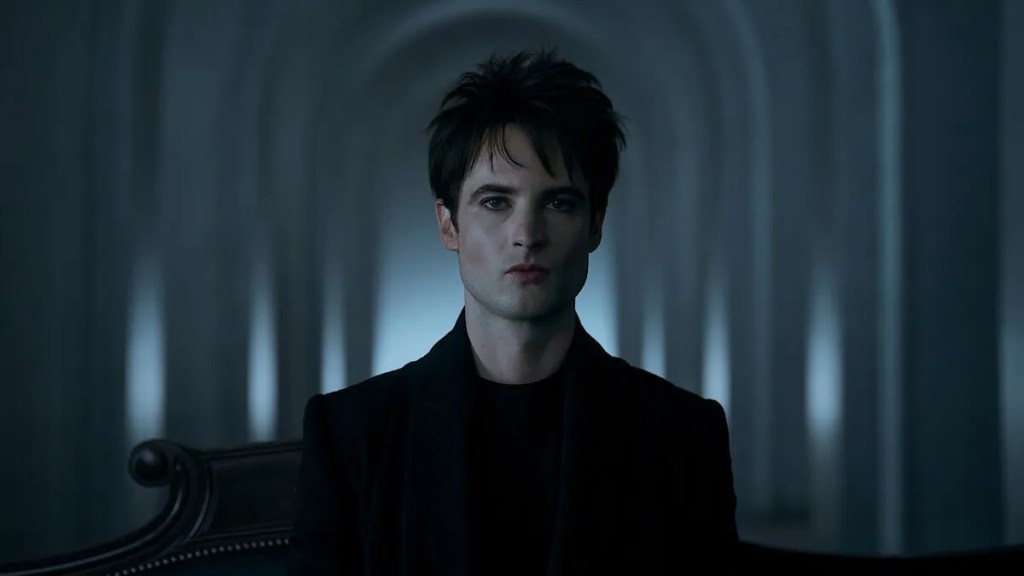
In The Sandman Season 2, Morpheus (Tom Sturridge) dies after he breaks a fundamental cosmic rule by spilling family blood.
He kills his son Orpheus to fulfill a long-promised boon and to atone for his past failures as a father. This act prompts the Kindly Ones, also known as the Furies, to seek vengeance. Cosmic law binds them to punish such transgressions.
In Volume 2, Lyta Hall becomes the Furies’ vessel, mistakenly blaming Dream for her son Daniel’s kidnapping. She unleashes devastation across the Dreaming, killing Merv Pumpkinhead, Gilbert, and Abel. In Episode 10, Morpheus chooses to sacrifice himself to end the destruction. He tells his allies, “It’s an opportunity to say thank you,” and summons Death, saying, “I’m tired, my sister. I’m very tired.”
Speaking to The Hollywood Reporter, creator Allan Heinberg explained, “Dream realizes he has grievously hurt the people he claims to love. He sees that his own behavior up until that point has been terrible, selfish, manipulative… he’s the bad guy in all these people’s stories. It completely guts him.” Heinberg added, “He says to Death, ‘Ever since I killed my own son, the Dreaming is not what it was to me… there’s nothing left for me here.’”
Heinberg stated that Morpheus could no longer become the version of Dream that the Dreaming needed: “Lucienne says there’s only so much that Dream knew he could change… he needed to be reborn as Daniel in order to be more human.” After Loki burns away Daniel’s humanity, the infant transforms into the new Dream.
In Episode 11, Morpheus’s allies hold his funeral, and Daniel steps into his new role as Dream. Heinberg concluded to The Hollywood Reporter, “In the end, it’s his choice [to die]… he knows that he’s not enough in this version of himself.”