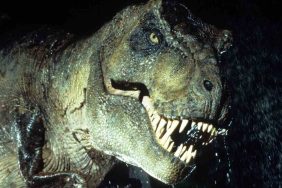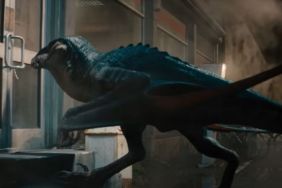
Curious why dinosaurs are dying in Jurassic World Rebirth? As the latest chapter in the iconic franchise hits theaters, audiences are met with a surprising shift in the story that reveals the mass extinction of dinosaurs just years after their global release in Jurassic World Dominion. Director Gareth Edwards introduces a stark new reality where nature takes its course in unexpected ways.
Here is what explains their extinction and what it means for the franchise.
Why are dinosaurs dying in Jurassic World Rebirth?
In Jurassic World Rebirth, most dinosaurs die off within five years after the events of Jurassic World Dominion. The film reveals early on that their biology is incompatible with modern ecosystems. Although scientists created them in the present day, they cloned the dinosaurs using ancient DNA, which preserved traits that cannot withstand today’s environmental conditions.
The film explains that these creatures cannot cope with climate change, emerging diseases, and extreme weather. Their bodies lack the adaptations needed for fluctuating temperatures and new pathogens, which causes mass extinction in areas they once inhabited.
Only a few dinosaurs remain, mostly in areas near the equator. These tropical zones, with their warmth, humidity, and high oxygen levels, closely resemble the prehistoric environments where dinosaurs once thrived. One such area is Ile Saint Hubert, a secret InGen facility off the coast of French Guiana. Most of the film takes place there.
The film shows that although dinosaurs rarely lived near the equator in ancient times due to disasters like wildfires and volcanic eruptions, today’s equatorial climate offers a stable, suitable refuge. Warm temperatures, dense forests, and abundant water now support the few surviving dinosaur populations.
Jurassic World Rebirth reveals Ile Saint Hubert as “Site C,” an InGen island housing genetically modified dinosaurs. It is the only named habitat, but the story hints at other equatorial sanctuaries. The film centers on a mission to retrieve dinosaur DNA for medical use, setting up potential sequels focused on finding more surviving dinosaurs.
Gareth Edwards directed the film, with a screenplay by David Koepp. It premiered on July 2, 2025.